A pouch type vacuum packaging machine utilizes advanced automation to streamline the filling and sealing process, featuring smart sensors, modular rotary systems, and precision pressure controls that ensure airtight integrity and maximum shelf life for diverse products. These machines represent the pinnacle of current packaging technology, combining mechanical robustness with intelligent software to minimize waste and maximize output in high-volume production environments.
The following comprehensive guide explores the sophisticated engineering and technological breakthroughs that define the next generation of smart vacuum systems. By examining these eight advanced features, professionals in the food, pharmaceutical, and chemical industries can better understand how these systems optimize the supply chain and protect product quality from the factory floor to the end consumer.
Content Overview
| Section | Summary |
| Technological Evolution of Smart Vacuuming | This section discusses how vacuum technology has evolved from manual chambers to intelligent, automated pouch-handling systems. |
| Precision Integrated Control Systems | An analysis of the PLC and HMI interfaces that allow operators to fine-tune vacuum levels and sealing temperatures. |
| Modular Rotary Motion Engineering | Details the multi-station design that allows for simultaneous pouch opening, filling, and vacuuming. |
| Smart Detection and Waste Reduction | Explains the "No Pouch, No Fill" sensor technology that prevents material loss and maintains machine hygiene. |
| Dual-Stage Sealing for Airtight Integrity | Focuses on the thermal engineering required to create leak-proof seals on various multi-layer films. |
| High-Speed Throughput and Efficiency | Explores how advanced mechanical synchronization allows for high cycles per minute without sacrificing vacuum quality. |
| Versatile Pouch Handling Capabilities | A look at how smart systems adjust to different pouch sizes, materials, and zipper configurations. |
| Hygiene and Washdown Compatibility | Covers the structural design elements, like stainless steel construction, that meet stringent food safety standards. |
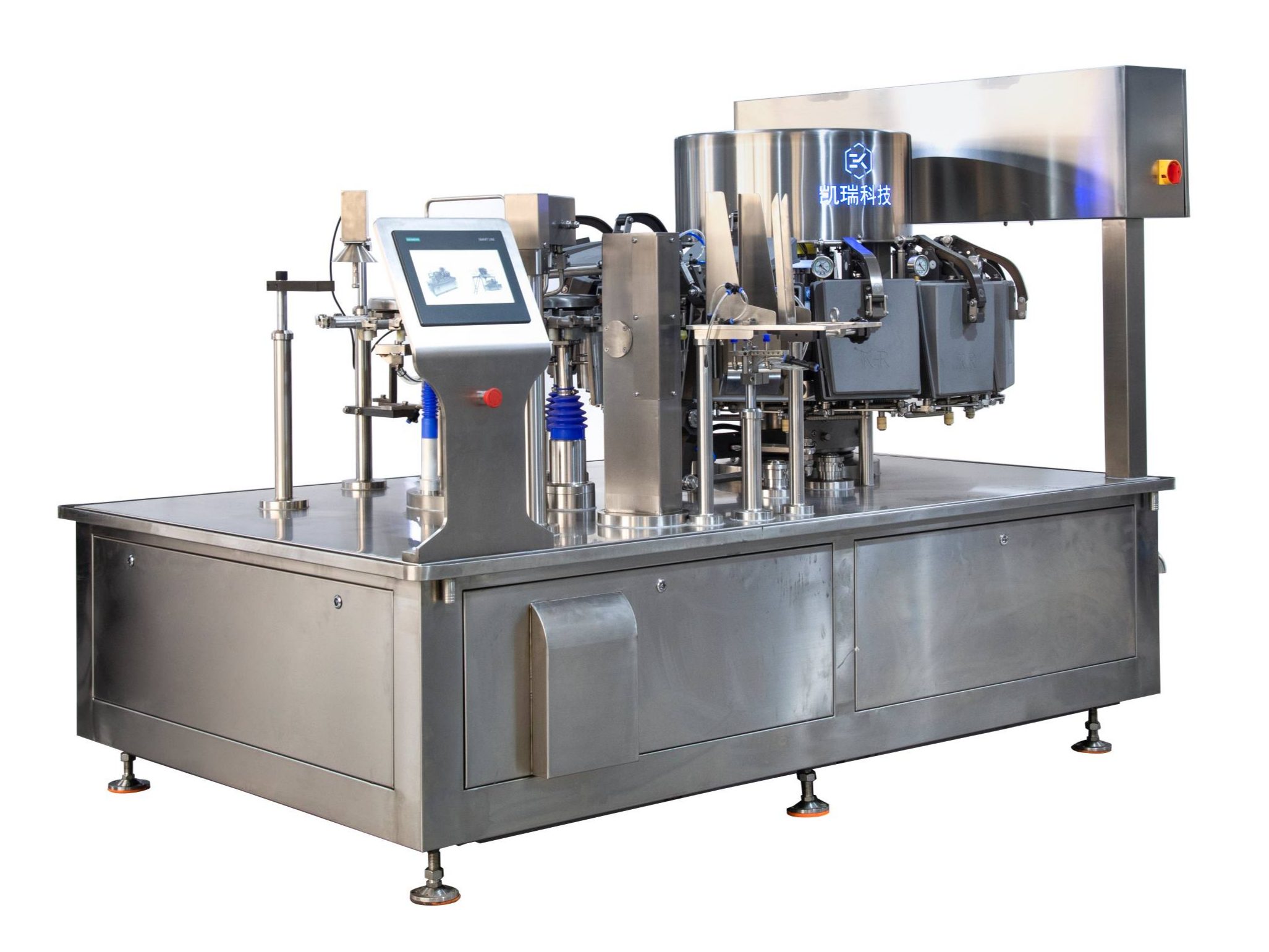
Technological Evolution of Smart Vacuuming
The evolution of the pouch type vacuum packaging machine marks a shift from labor-intensive manual processes to fully autonomous systems that integrate high-speed robotics with precise vacuum science.
The history of vacuum packaging began with simple chamber machines where operators manually placed bags inside a vacuum box. While effective, this method was slow and inconsistent. The modern era of smart packing utilizes a rotary design where the pouch moves through a series of automated stations. Each station is dedicated to a specific task: picking the pouch, opening it, filling the product, extracting the air, and sealing it. This transition has allowed manufacturers to scale production from a few units per minute to over sixty cycles per minute.
Modern smart systems now incorporate Internet of Things (IoT) connectivity, allowing managers to monitor performance data in real-time. This level of technical evolution ensures that variables such as atmospheric pressure, humidity, and product temperature are accounted for during the vacuum process. By utilizing a Fully Automated Non-Vacuum Pouch Type Packaging Machine for Various Food alongside dedicated vacuum units, facilities can create a diversified production line capable of handling both perishable and non-perishable goods with equal precision.
Furthermore, the materials used in pouches have evolved. Modern smart machines are designed to handle complex laminates, including sustainable and recyclable films. These films require specific temperature and pressure settings that only a smart controller can manage accurately. The evolution is not just about speed; it is about the intelligence required to maintain a perfect vacuum seal across thousands of cycles without human intervention.
Precision Integrated Control Systems
Integrated control systems in a pouch type vacuum packaging machine act as the central brain, coordinating vacuum pumps, mechanical arms, and heating elements via a centralized PLC interface.
At the heart of every advanced packaging system is the Programmable Logic Controller (PLC). This industrial computer manages the timing of every movement within the machine down to the millisecond. For vacuum packing, precision is paramount. If the vacuum pump engages too early, the product may be sucked into the seal area; if it engages too late, residual oxygen remains in the pouch, leading to spoilage. Smart machines utilize high-resolution touchscreens (HMI) that allow operators to save specific "recipes" for different products, ensuring consistency across shifts.
The control system also manages the thermal profiles of the sealing bars. Unlike older machines that used a simple on/off thermostat, smart systems use PID (Proportional-Integral-Derivative) controllers. These algorithms maintain a constant temperature within a fraction of a degree, preventing the film from melting too much or failing to bond. This precision is critical when working with high-performance pouch type vacuum packaging machine setups where the margin for error is extremely thin.
Additionally, these systems provide comprehensive diagnostics. If a component begins to wear out or if the vacuum level drops below a set threshold, the machine alerts the operator immediately. This proactive approach to maintenance prevents costly downtime and ensures that every package leaving the facility meets the required quality standards. The integration of these controls allows for a seamless flow between the packaging machine and upstream processing equipment.
Key Benefits of Smart Control Systems
Recipe Management: Quickly switch between product types without manual mechanical adjustments.
Real-time Monitoring: Track vacuum levels and seal integrity for every individual pouch.
Remote Access: Technicians can often troubleshoot issues via a secure network connection, reducing service costs.
Modular Rotary Motion Engineering
Modular rotary motion engineering allows a pouch type vacuum packaging machine to perform multiple operations simultaneously on a circular carousel, greatly increasing output efficiency.
The rotary design is what differentiates high-speed industrial machines from slower linear models. In a rotary system, the machine is divided into several stations (usually 6, 8, or 10). At any given moment, one pouch is being picked, another is being opened, a third is being filled, and a fourth is being vacuumed and sealed. This parallel processing is the key to achieving high-volume production. The modularity of these stations means that manufacturers can customize the machine for specific needs, such as adding a gas flushing station or a secondary sealing station for thicker materials.
The mechanical synchronization of these modules is a feat of engineering. Precision cams and servo motors drive the rotation, ensuring that the grippers hold the pouches firmly as they move through high-velocity arcs. In a smart pouch type vacuum packaging machine, these grippers are often adjustable via the control panel, allowing the machine to accommodate various pouch widths without needing to swap out heavy hardware. This flexibility is vital for co-packers who handle multiple brands and package sizes on a single line.
Moreover, the vacuum station in a rotary machine is a specialized module. It typically involves a vacuum box that descends over the open pouch, creates a local hermetic environment, extracts the air, and then initiates the seal while the vacuum is still held. This "in-box" vacuuming ensures that the oxygen levels are reduced to less than 1%, which is far superior to "snorkel" type vacuum systems.
Advantages of Rotary Modules
Continuous Flow: Eliminates the "stop-start" vibration found in linear machines.
Space Efficiency: The circular footprint is often more compact than long conveyor-based systems.
Scalability: Modules can be upgraded or replaced as production requirements change.
Smart Detection and Waste Reduction
Smart detection technology in a pouch type vacuum packaging machine utilizes an array of sensors to verify pouch presence and alignment, preventing the machine from discharging product if a pouch is missing or improperly opened.
One of the most significant costs in industrial packaging is material waste—both the product itself and the plastic film. Advanced machines employ a "No Pouch, No Fill" logic. Sensors at the first station detect if the vacuum suction cup successfully picked a pouch. If no pouch is detected, the machine skips the filling and sealing cycles for that specific station. This prevents the product from being dumped onto the machine's internal components, which would otherwise cause massive cleanup delays and potential contamination.
Furthermore, advanced sensors check if the pouch has been opened correctly. If a zipper is stuck or a pouch is folded, the filling nozzle will not descend. This level of intelligence is essential when operating a high-efficiency pouch type packaging machine. By ensuring that every fill is a "good fill," manufacturers can maintain a higher yield and keep the workspace hygienic.
The detection system also extends to the final output. Vision systems can be integrated to inspect the seal for wrinkles or trapped particles. If a defect is found, the pouch is automatically diverted to a reject bin rather than continuing to the secondary packaging stage. This automated quality control reduces the need for manual inspection and protects the brand's reputation for quality.
Dual-Stage Sealing for Airtight Integrity
Dual-stage sealing ensures a pouch type vacuum packaging machine creates a permanent, leak-proof bond by using a primary heat-sealing bar followed by a secondary cooling or reinforcement bar.
Vacuum packaging puts immense stress on the seal. Because the internal pressure is much lower than the external atmospheric pressure, the atmosphere is constantly trying to "push" its way back into the bag. A single, weak seal will eventually fail, leading to a "leaker." To combat this, smart machines use a two-step process. The first stage applies calibrated heat and pressure to melt the inner layers of the film together. The second stage uses a cooling bar to set the plastic quickly, locking the seal in place before the pouch is released from the machine's grippers.
The temperature for this process must be precisely controlled. Different materials, such as aluminum foil laminates or clear PE/PA films, have different melting points. A high-quality pouch type vacuum packaging machine allows for independent temperature settings for the front and back sealing bars. This is particularly important for gusseted pouches where the machine must seal through four layers of material at the edges but only two layers in the center.
In addition to heat and cooling, the texture of the seal bar plays a role. Patterns like ribbing or cross-hatching increase the surface area of the bond and help to "push" any tiny droplets of liquid or grains of powder out of the seal area during the compression phase. This ensures that even if a product is slightly messy during the filling stage, the vacuum integrity remains uncompromised.
High-Speed Throughput and Efficiency
High-speed throughput in a pouch type vacuum packaging machine is achieved through the perfect synchronization of mechanical drives, pneumatic actuators, and vacuum pumps, allowing for continuous production without downtime.
Efficiency in a B2B context is measured by the cost per unit produced. A machine that can run at 60 bags per minute with 99% uptime is significantly more valuable than a slower or less reliable model. Smart vacuum machines achieve these speeds through the use of high-flow vacuum pumps and large-diameter piping that can evacuate air in a fraction of a second. The faster the air can be removed, the faster the rotary table can move to the next station.
Synchronization is managed by electronic cams. In older machines, mechanical cams were used, which were difficult to adjust and prone to wear. Modern systems use "soft cams" programmed into the servo drives. This allows for smooth acceleration and deceleration of the rotary table, which prevents liquid products from splashing out of the pouches during transit between stations. Maintaining a clean seal area is the secret to high-speed vacuum success.
To further enhance efficiency, many pouch type vacuum packaging machine models feature quick-changeover parts. This allows a team to switch the machine from a 500g pouch to a 1kg pouch in less than 20 minutes. In a modern factory environment, the ability to run multiple SKUs on a single line is a competitive necessity.
Efficiency Metrics to Track
| Metric | Description | Target Goal |
| CPM (Cycles Per Minute) | The number of finished pouches produced per minute. | 40-60+ |
| Vacuum Level | The percentage of air removed from the pouch. | > 99.2% |
| Rejection Rate | The percentage of pouches failed by the detection system. | < 0.5% |
Versatile Pouch Handling Capabilities
A smart pouch type vacuum packaging machine is designed to handle a vast array of pouch geometries, including flat pouches, stand-up pouches (Doypack), and zippered pouches, with minimal mechanical reconfiguration.
The market today demands variety. Consumers want re-closable zippers, stand-up features for shelf visibility, and different sizes for portion control. A versatile machine must be able to pick these different shapes from a magazine, stabilize them, and open them wide enough for the filling nozzle. Smart machines use adjustable suction cups and grippers that can be moved along a rail to accommodate narrow or wide pouches. This flexibility is a core feature of a versatile pouch type packaging machine.
Zipper handling is particularly complex. A smart machine includes a specialized module that mechanically "pops" the zipper open before the pouch reaches the filling station. It also ensures that the zipper is not damaged during the vacuuming and sealing process. If the zipper is not opened fully, the product will spill; if it is not sealed correctly, the vacuum will be lost. Advanced machines use ultrasonic sensors to verify the zipper state.
Material compatibility is another aspect of versatility. From eco-friendly paper-based laminates to heavy-duty foil for industrial chemicals, the machine must adjust its vacuum pull and seal dwell time accordingly. This is handled through the PLC's recipe system, where the optimal parameters for each material type are stored and recalled with a single touch.
Hygiene and Washdown Compatibility
Hygiene and washdown compatibility in a pouch type vacuum packaging machine are achieved through stainless steel construction and IP65-rated electrical components, allowing for rigorous cleaning protocols required in food production.
In the food and pharmaceutical industries, the ability to clean a machine thoroughly is as important as its packing speed. Smart machines are designed with "sanitary design" principles, meaning they have slanted surfaces to prevent water from pooling and minimal "dead zones" where bacteria can grow. The entire frame is typically constructed from SUS304 or SUS316L stainless steel, which is resistant to the corrosive chemicals used in industrial cleaning.
The electrical systems are shielded in waterproof enclosures. Motors and sensors are rated for high-pressure washdowns (IP65 or higher), meaning the maintenance team can use hoses to clean the machine without damaging the sensitive electronics. This is a critical feature for any pouch type vacuum packaging machine operating in meat, poultry, or seafood environments where biological contamination is a constant risk.
Furthermore, many advanced machines feature a "clean-in-place" (CIP) function for the filling nozzles. This allows the internal product path to be flushed with cleaning solution without disassembling the entire pump system. This reduces labor costs and ensures that the machine is ready for the next production run in the shortest possible time, maintaining the high standards required by global food safety certifications like GFSI or FSMA.
Conclusion
The integration of smart technology into the pouch type vacuum packaging machine has revolutionized the B2B packaging sector. By combining precision control systems, modular rotary engineering, and advanced detection sensors, these machines provide a level of reliability and efficiency that was previously unattainable. From ensuring airtight seals via dual-stage heating to maintaining the highest hygiene standards through washdown-ready designs, every feature is engineered to optimize the production lifecycle.
As manufacturing continues to move toward Industry 4.0, the role of intelligent packaging systems will only grow. Facilities that invest in high-quality automated packaging technology position themselves to handle the complexities of modern consumer demands while maintaining the lean operational profiles necessary for long-term profitability. Ultimately, smart vacuum packing is not just about the machine; it is about the security and quality of the product inside the pouch.


